
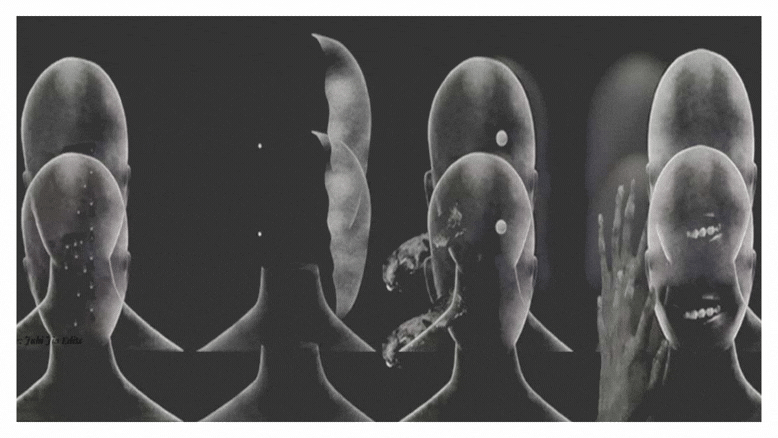
Why is mental illness still treated as a cultural taboo? How do cultural attitudes shape our understanding of mental health? And how do untreated psychological conditions escalate into inner warfare?
In our fast-paced world, conversations surrounding mental illness remain both vital and uncomfortable. Despite growing awareness around mental health, cultural norms continue to dictate how psychological struggles are perceived, discussed, or entirely ignored. The consequences of these perceptions are far-reaching, impacting everything from childhood development to adult relationships, workplace dynamics, and broader social behaviour.
Cultural Conditioning and Emotional Repression
Culture is not just about food, festivals, or fashion—it’s the unseen architecture of our thoughts, values, and behaviours. Influenced by ethnicity, religion, race, and family traditions, these norms are passed down through generations, shaping how societies view vulnerability and emotional well-being.
Every culture has rules about what can be expressed and what must remain hidden. Unfortunately, mental illness often belongs to the latter category, buried beneath expectations of strength, faith, duty, success, or social respectability.
In many traditional societies, mental illness is not considered a legitimate concern. Rather, it is dismissed as weakness, misfortune, poor character, or even a sign of supernatural possession. In such environments, emotional distress is rarely validated. Instead, it becomes a source of stigma, leading to shame, secrecy, and denial.
A person suffering from depression may be told to “pray it away” or “stop being ungrateful.” Meanwhile, anxiety is often mistaken for “laziness, overthinking, or a lack of resilience.” Such rhetoric creates barriers for individuals who might otherwise seek professional help.
Societal Denial and Emotional Neglect
Some societies acknowledge emotional imbalance but still trivialise it. Mental health is rarely treated with the same urgency as physical health. A panic attack may be dismissed as attention-seeking, while a fever warrants immediate concern. The underlying message remains the same: only visible pain is worthy of care.
But what if this collective negligence is contributing to a mentally unhealthy society?
Cultural reluctance to acknowledge emotional struggles often causes people to question their own experiences. Many continue suppressing their emotions until symptoms evolve into deeper trauma. Emotional intelligence is rarely taught, despite being fundamental to resilience, empathy, communication, and decision-making.
The Role of Social Norms in Shaping Mental Attitudes
Social and cultural upbringing heavily influences how individuals interpret symptoms, seek support, and understand recovery. One’s background may determine whether therapy is viewed as self-care or selfishness. In many collectivist cultures, seeking therapy is sometimes perceived as exposing family matters or betraying cultural expectations.
These assumptions can become dangerous. Shame and guilt act as invisible chains that keep people silent, while families may prioritise social image over emotional well-being.
Across many Asian, African, and South American communities, derogatory labels such as “crazy,” “psycho,” or “possessed” continue to be used casually. As a result, individuals experiencing psychological distress are often pushed into isolation, further compounding their pain and suffering.
Perhaps even more concerning is the way many cultures discourage emotional expression, particularly among men. Vulnerability is mistaken for weakness, while silence is celebrated as strength. This toxic cycle continues to fuel emotional repression and generational trauma.
When Therapy Becomes a Marketplace
Amid growing awareness, another trend has emerged—the commercialisation of therapy and wellness culture.
Mental well-being, once viewed as a deeply personal journey of healing, is increasingly marketed as a lifestyle product or a luxury service. Self-help mentors, wellness influencers, and even certain therapeutic spaces have transformed emotional suffering into a profitable industry.
The line between healing and monetisation is becoming increasingly blurred. While therapy remains important and often life-changing, it is equally important to remain critical of systems that exploit psychological pain for commercial gain.
Similarly, toxic positivity across digital platforms pressures individuals to remain grateful, motivated, and happy regardless of circumstance. In doing so, genuine struggles are invalidated, and difficult emotions are treated as personal failures.
Yet denying negative emotions is not wellness—it is suppression.
Mental Illness & Psychological Trauma in Everyday Life
Psychological trauma does not always emerge from wars, disasters, or catastrophic events. Often, it develops quietly through everyday experiences—emotionally unavailable parents, abusive relationships, social exclusion, bullying, chronic stress, or unhealthy work environments.
Even creative professionals frequently navigate unique psychological challenges, operating within industries where the boundaries between creativity and mental illness, identity and success, can become increasingly blurred.
These invisible wounds may manifest through addictive behaviours, chronic dissatisfaction, self-sabotage, burnout, or unexplained physical symptoms. For some individuals, trauma appears as overworking. For others, it takes the form of people-pleasing, perfectionism, or emotional withdrawal.
Unfortunately, many never pause long enough to reflect, let alone heal. The pace of modern life keeps us distracted. Overconsumption of media, digital validation, and escapism often numbs us from confronting our deeper emotions. We begin confusing busyness with progress.


The Digital Age and Declining Mental Hygiene
In today’s hyper-digital society, we are more connected than ever before, yet increasingly emotionally fragmented.
Screens have become emotional filters. We curate joy, success, and belonging while concealing loneliness, anxiety, and despair. The constant pressure to perform, compare, belong, and remain relevant contributes to burnout and self-alienation.
Children are growing up in an environment where silence feels louder than conversation, and self-expression is increasingly filtered through algorithms. Childhood development is now influenced not only by family and community but also by digital culture.
If this trajectory continues, we risk raising generations that are technologically connected yet emotionally disconnected.
Religion, Identity, and the Inner Conflict
Religion can provide comfort, community, and structure during difficult times. For many individuals, faith serves as an important source of emotional support.
However, when religious interpretations stigmatise mental illness or frame psychological suffering as a spiritual failure, they can become restrictive rather than healing.
Mental health should not be at odds with spiritual practices. Yet when guilt is weaponised and emotional struggles are treated as moral shortcomings, individuals face a painful dilemma: preserve faith or pursue healing.
Similarly, identity-related conflicts connected to caste, gender, sexuality, or social belonging can intensify psychological distress. Many individuals carry invisible burdens while navigating systems that discourage authenticity and self-expression.
Mental Health in the Workplace
Workplace culture remains another domain where mental health is frequently overlooked.
The glorification of hustle culture, toxic leadership, unrealistic expectations, and the absence of psychological safety contribute significantly to burnout. Many employees hesitate to discuss emotional struggles for fear that doing so may affect their reputation, opportunities, or job security.
This raises an important question: can productivity truly exist without emotional well-being?
While some forward-thinking organisations are beginning to prioritise emotional intelligence, empathy, and psychological support, progress remains slow. Until success is redefined beyond targets, profits, and performance metrics, many workplaces will continue overlooking the human experience.

Toward Healing: Yoga, Eudaemonia, and Self-Care
Healing is neither linear nor universal. Different individuals require different paths.
Ancient practices such as Yoga offer valuable tools for self-regulation and emotional awareness. Far beyond a fitness trend, yoga represents a holistic system that connects the mind, body, and spirit. Research continues to demonstrate its positive effects on emotional stability and stress management.
Similarly, journaling, mindful breathing, self-reflection, therapy, and healthy boundaries can all form part of a strong mental hygiene practice. These habits support emotional resilience and encourage greater self-awareness.
For some individuals, however, psychotherapy, counselling, or medical intervention may be necessary. Such treatments should never be dismissed or replaced by simplistic wellness narratives.
Ultimately, the goal is Eudaemonia—a state of flourishing achieved through alignment between the mind, body, and soul. Reaching this state requires honesty, discipline, self-awareness, and compassion toward both ourselves and others.
Make Mental Health a Priority
Every human being deserves the opportunity to live without constant internal warfare.
Mental illness is not a personal failure, nor is it a cultural inconvenience to be hidden from public view. It is a human reality that deserves understanding, empathy, and meaningful support.
Mental hygiene practices may help us maintain emotional well-being, but they cannot replace open conversations about mental illness. Until we challenge cultural stigma, many individuals will continue to suffer in silence.
Let us stop treating mental health as either a taboo or a trend.
We should talk about it at dinner tables, in classrooms, workplaces, and communities. And create a culture that values authenticity over appearance, healing over performance, and understanding over judgment.
Because a healthy mind is not a luxury.
It is the foundation of a truly thriving society.