
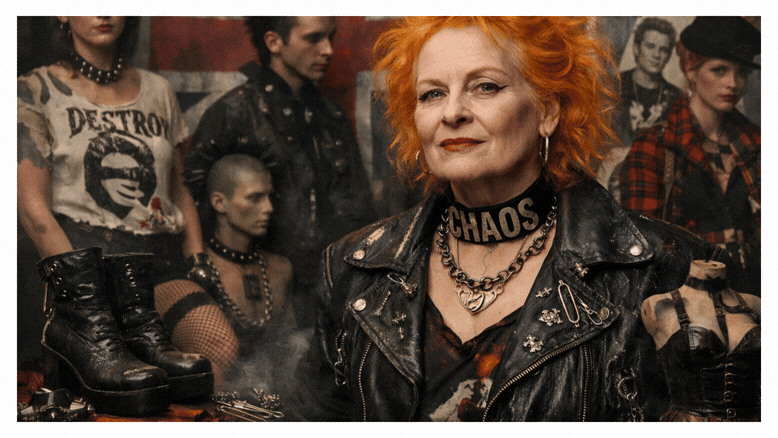
Vivienne Westwood never behaved as fashion was supposed to. Long before sustainability slogans, rebellious runway theatrics, or ironic luxury branding became industry clichés, Westwood was already treating clothing as a weapon—sharp, provocative, and occasionally outrageous.
Emerging from the restless creative underbelly of London in the 1970s, Westwood did not merely design garments; she engineered cultural disruptions. Her work asked uncomfortable questions about class, authority, consumerism, and taste. In her world, a ripped T-shirt could carry as much political weight as a manifesto, and a corset could challenge centuries of cultural etiquette. Punk fashion, as the world came to know it, was less a style than a cultural argument—and Westwood was its most articulate provocateur.
Vivienne Westwood and the Birth of Punk Rebellion
Punk did not begin on a runway. It began in the frustrated imagination of young people who believed the system had already failed them.
In the mid-1970s, Westwood and her partner Malcolm McLaren opened a boutique on London’s King’s Road called SEX. The name alone was an act of provocation. Inside the shop, the clothes were even more confrontational: bondage trousers, ripped shirts held together with safety pins, slogans that flirted with taboo imagery, and tartan garments that mocked British respectability.
The aesthetic soon found its most notorious ambassadors in the rock band, Sex Pistols, whose anarchic performances turned Westwood’s clothing into the unofficial uniform of punk rebellion.
The point, however, was never simply shock value. Punk fashion rejected the quiet politeness of conventional style. It disrupted comfort. It mocked authority. It turned clothing into a kind of political art, even if the wearers themselves did not always articulate it that way.
In Westwood’s hands, fashion stopped trying to look elegant. Instead, it started asking whether elegance was ever neutral to begin with.
The Cultural Explosion of Punk Fashion
What makes Vivienne Westwood fascinating is that she refused to remain trapped in the punk stereotype she helped create.
By the early 1980s, she pivoted from raw street rebellion toward something more intellectually mischievous. Her Pirate collection (1981) replaced shredded chaos with romantic blouses, theatrical silhouettes, and flamboyant styling inspired by historical costume. Suddenly, punk looked like it had wandered into a museum and rearranged the exhibits.
Westwood’s genius was never destruction alone. It was a distortion. She loved British history, but she loved interrogating it even more.
Corsets, aristocratic tailoring, and tartan fabrics recur throughout her work. Yet instead of honouring tradition politely, Westwood exaggerated, twisted, and sometimes mocked it outright. Fashion historians often describe her approach as “historical reinterpretation,” but that phrase is too polite. Westwood was staging a debate with the past.
Later British designers, such as Alexander McQueen, would also transform fashion into cultural theatre. Still, Westwood had already established the blueprint: runway shows could be intellectual performances as much as commercial presentations.
Vivienne Westwood’s Collections: History Reimagined Through Fashion
If Westwood’s early punk years challenged social authority, her later collections challenged fashion history itself.
Take the Mini-Crini collection (1985)—a strange hybrid of Victorian crinolines and modern miniskirts. It was playful, absurd, and strangely elegant all at once. Or her Anglomania collection (1993), which treated British heritage like both a love letter and a satirical critique.
Westwood had a particular fascination with corsetry. Historically, corsets symbolised restriction and patriarchal beauty standards. Yet in her designs, they often appeared as symbols of confidence and theatrical femininity. She reclaimed them not as tools of discipline but as expressions of dramatic self-presentation.
Her silhouettes frequently exaggerated the body with high platform shoes, sculptural tailoring, and sharply defined waists. The effect was almost cartoonish at times, and that was precisely the point. Fashion, Westwood suggests, should never take itself too seriously.
Fashion as Political Activism
As her career evolved, Vivienne Westwood became one of the fashion industry’s loudest political voices.
She campaigned passionately against environmental destruction, criticised corporate greed, and repeatedly attacked the culture of relentless consumption. In an industry obsessed with seasonal novelty, her most famous advice was surprisingly simple:
Buy less. Choose well. Make it last.
It sounded almost rebellious in a fashion system increasingly dominated by fast fashion, where garments are designed to disappear as quickly as they appear.
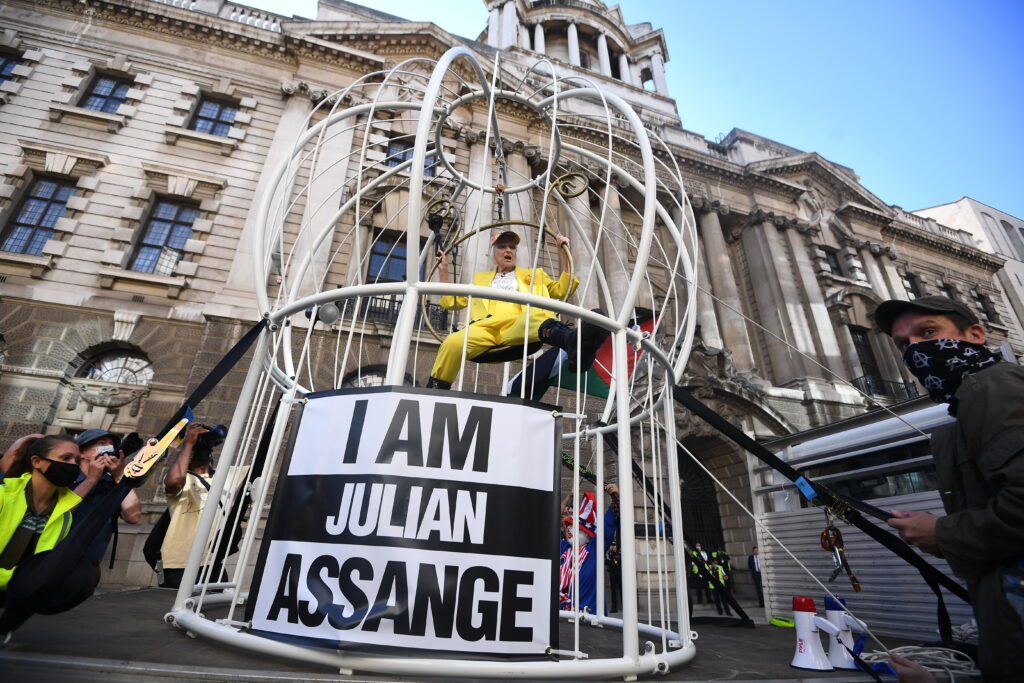
Westwood also supported controversial causes, including the campaign for Julian Assange. To some observers, her activism felt eccentric. To others, it felt essential. What mattered was that she refused to perform the polite neutrality expected of luxury designers.
At a time when fashion marketing often relies on polished optimism and what could politely be called toxic positivity, Westwood preferred confrontation. She believed fashion should challenge society rather than flatter it.
Why Vivienne Westwood Became an Icon
Few designers manage to create a visual language that survives beyond their own generation. Westwood did exactly that.
Her orb logo—a symbol combining the British royal orb with planetary rings, perfectly captures the philosophy behind her work: tradition orbiting the future. The imagery is both reverent and mischievous, much like the designer herself.
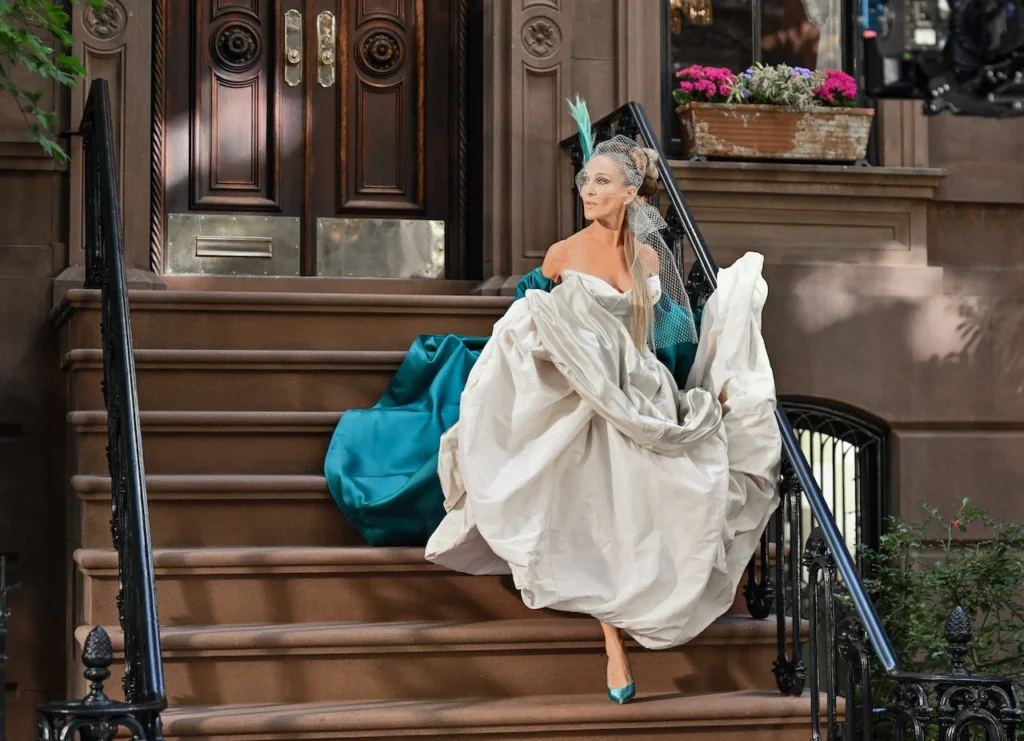
Over time, the radical aesthetic that once terrified polite society gradually entered mainstream culture. Westwood’s designs appeared in films like Cruella and especially in Sex and the City, where her extravagant wedding dress for Carrie Bradshaw became one of the most memorable fashion moments in modern cinema.
It was a curious transformation. The woman who helped invent punk rebellion had quietly become part of pop-culture mythology.
Yet the spirit of disruption remained intact.
The Westwood Philosophy of Rebellion
The legacy of Vivienne Westwood is not merely a catalogue of garments or runway spectacles. It is a philosophy disguised as fashion.
She proved that clothing could function as cultural critique, political commentary, historical satire, and personal expression all at once. A Westwood garment rarely exists just to be beautiful; it exists to start a conversation.
That may be why, perhaps, her work still feels relevant in an era saturated with trends. Fashion today moves faster than ever, but rebellion remains surprisingly rare.
Westwood understood something many designers forget: style becomes powerful when it challenges the world around it.
And few designers challenged it more relentlessly than Vivienne Westwood.