
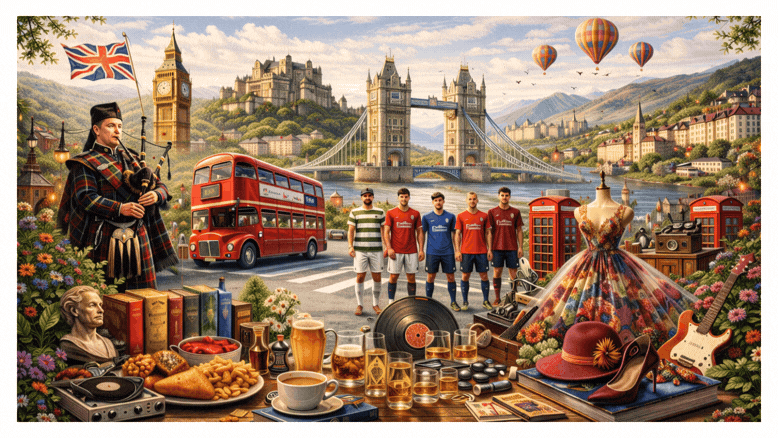
The United Kingdom is often spoken about as if it were a single cultural entity—one accent, one history, one way of life. In reality, it is anything but layered, contradictory, occasionally confused, and quietly fascinating. To travel through the UK is not to move across distances, but across moods, memories, and identities shaped by centuries of movement, influence, and reinvention.
Moving through England, Scotland, and Wales, what stood out most was not just architecture or landscapes, but how culture lives in the everyday through food, literature, humour, art, and the way people hold on to the past while constantly negotiating the present.
The United Kingdom as a Cultural Crossroads
The United Kingdom functions less like a neatly defined nation and more like a cultural crossroads. Shaped by trade, migration, empire, and modern multicultural life, its heritage is most visible in its cities. This is a history you don’t just read about; it unfolds in neighbourhoods, kitchens, art spaces, and conversations.
In places like London, cultures don’t just coexist; they overlap. In other regions, history feels more anchored, but no less complex. The result is a country where tradition and transformation happen simultaneously, sometimes uncomfortably, often creatively.
England: Tradition, Reinvention, and Controlled Chaos
England carries its history visibly—stone buildings, ceremonial rituals, inherited systems—but it also has an undeniable talent for reinvention. The contrast is part of its charm.
In London, the cultural pulse feels global. One street might reflect centuries of British history, while the next speaks in a dozen languages through food, fashion, and sound. Migration shapes the city as much as monarchy; museums house global collections, and neighbourhoods become cultural microcosms of the world.
Cities like Bath reflect a different rhythm—Roman roots, Georgian elegance, and a quieter relationship with heritage. Meanwhile, Bristol leans into its countercultural identity, known for street art, independent thinking, and events like the Bristol International Balloon Fiesta, where creativity quite literally rises into the sky.
England’s cultural identity is not fixed; it is constantly negotiating between preservation and rebellion, often with dry humour and a strong cup of tea.
Scotland: Memory, Modernity, and the Power of Place
Scotland’s culture feels inseparable from its landscape, its sounds, and its long memory. History here does not sit quietly behind glass; it moves through streets, hills, and everyday life.
In Edinburgh, the literary legacy is almost ambient—felt in bookshops, old lanes, and festivals that turn writing and ideas into public celebration. The city carries its intellect lightly, balancing tradition with a steady flow of contemporary thought. Glasgow, by contrast, feels louder and more visceral; its creative output shaped by industry, resilience, and a strong working-class voice that expresses itself through music, art, and design.
Then there are the Scottish Highlands, where culture becomes almost elemental. Vastness, silence, and scale strip life down to essentials. Here, the sound of a bagpiper, whether echoing across a valley, drifting through a town square, or heard unexpectedly on a street corner, feels less like performance and more like memory made audible. It ties cities and countryside together, carrying Scottish identity beyond words and into sound and rhythm.
And, of course, there is Scotch whisky, not merely a liquor, but geography, climate, and craft distilled. Each region tells its own story, much like Scotland itself: varied, grounded, and quietly expressive.
Wales: Language, Landscape, and Quiet Cultural Confidence
Wales speaks in a softer register, but its cultural depth runs just as deep. Identity here is sustained through continuity of language, land, and labour.
The Welsh language remains central, not symbolic. It is spoken, sung, written, and lived. Poetry and music form the backbone of cultural expression, and the landscape—rolling hills, valleys, and coastlines shapes a sense of belonging that feels intimate and enduring.
Wales’s industrial past also leaves a powerful imprint. Welsh coal, once the backbone of communities and global trade, is more than economic history; it is cultural memory. It shaped towns, labour movements, and a collective resilience that still informs Welsh identity today. This legacy of work, voice, and solidarity contrasts beautifully with the quiet strength of its rural and coastal spaces.
Alongside this history, modern craftsmanship, such as the growing recognition of Welsh whisky, signals a culture that honours its past while redefining itself on its own terms.
Food in the United Kingdom: From Survival to Storytelling
British food has long suffered from unfair stereotypes, but food in the United Kingdom today tells a much richer story. Migration has reshaped kitchens across the country, turning everyday meals into cultural expressions.
Yes, fish and chips still matter—crispy, comforting, and best eaten without overthinking. But alongside it are global influences that have become integral to British identity: South Asian curries, Middle Eastern flavours, Caribbean spices, European baking traditions, and modern reinterpretations of regional classics.
Food in the UK is less about perfection and more about adaptation, how cultures meet, merge, and eventually feel at home on the same plate.
Art, Literature, and the Everyday Creative Class
Creativity in the United Kingdom does not belong to a single discipline or era; it moves fluidly between literature, music, fashion, and everyday life. It is shaped as much by geography as by social change, and often emerges from the tension between tradition and disruption.
Writers like Jane Austen or William Shakespeare observed English society with precision and quiet irony long before cultural critique had a name. Popular stories such as Harry Potter transformed British schools, landscapes, and folklore into a shared global imagination. In Scotland and Wales, storytelling remains deeply tied to place, rooted in language, oral tradition, and lived experience.
Music has long been one of the UK’s most powerful cultural exports. Bands like The Beatles and Queen didn’t just produce soundtracks for generations; they reshaped how popular culture travels across borders. Cities such as London, Glasgow, and Bristol continue to nurture scenes where experimentation feels natural rather than forced.
Fashion and design reflect a similar spirit. Designers like Alexander McQueen drew from British heritage only to challenge it—merging history with provocation, structure with emotion. Creativity here often thrives on contradiction.
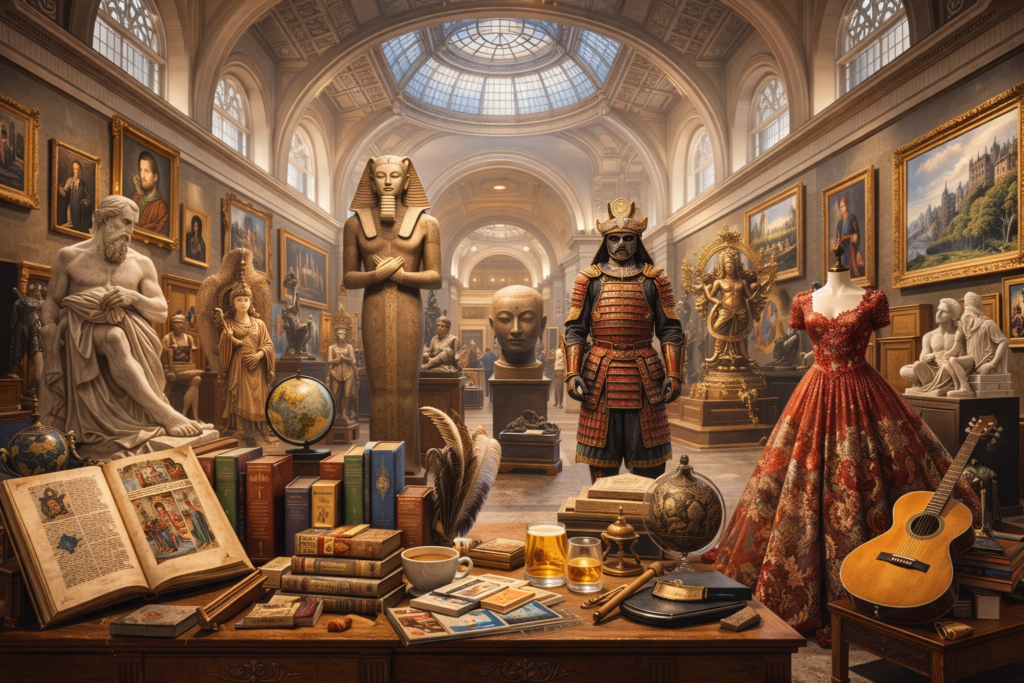
Museums, particularly the British Museum or the Victoria and Albert Museum in London, add another layer. Housing collections from across the world, they reflect both curiosity and complexity, places where global histories intersect, sometimes uncomfortably, always revealing how deeply interconnected cultures truly are.
Football, too, operates as a cultural language in the United Kingdom. Clubs like Manchester United, Liverpool, Chelsea, Arsenal, Celtic, or Rangers are not just teams but living identities. They shape cities, class narratives, fashion, music, and collective emotion. Stadiums become cultural theatres, where history, loyalty, and creativity play out every week.
Why the United Kingdom Feels Larger Than Its Geography
Despite its relatively small size, the United Kingdom feels culturally vast. Regional identities shift quickly, accents change within hours of travel, and history presses close no matter where you stand.
What makes the UK compelling is not just what it shows, but what it leaves unsaid, the subtle negotiations between past and present, local and global, tradition and reinvention.
A Note on Ireland (For Another Journey)
This journey moved through England, Scotland, and Wales. Ireland, both Northern Ireland and the Republic, deserves its own cultural exploration, one that sits at the intersection of the United Kingdom and Europe, shaped by its own layered histories and identities. That story is best told separately.
Leaving the United Kingdom with More Questions Than Answers
The United Kingdom is not a destination you neatly summarise at the end of a trip. It lingers in accents that change within a train ride, in meals that tell stories of migration, in music drifting through streets old enough to remember entirely different worlds.
What stays with you is not just what you saw, but how culture here feels negotiated rather than fixed. History is present, but not preserved in isolation; it is constantly being reinterpreted through art, food, language, and everyday life. The United Kingdom asks you to sit with complexity to accept that identity can be layered, sometimes contradictory, and still deeply rooted.
Perhaps that is why travelling through England, Scotland, and Wales feels less like moving across countries within a country and more like moving through conversations—between past and present, local and global, tradition and reinvention. And when you leave, you don’t carry a single narrative with you, but many unfinished ones, waiting to be revisited, reread, and reimagined.