
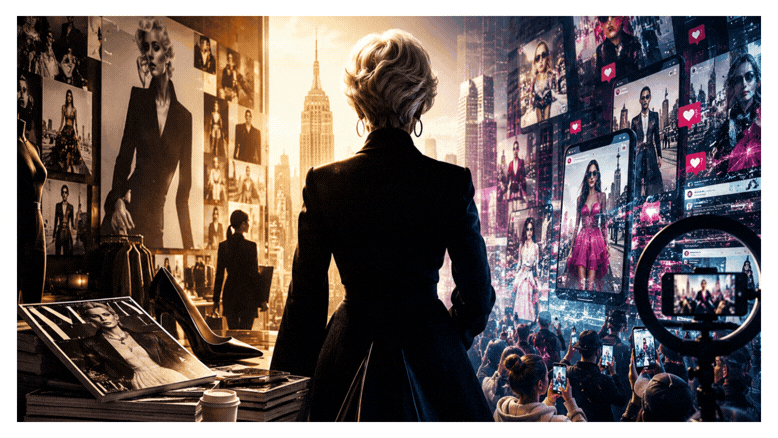
The Devil Wears Prada was never really about fashion. Beneath the designer handbags, glossy magazine covers, and impossible deadlines was a story about power—who holds it, how it is maintained, and what people are willing to sacrifice to get close to it.
When the first film was released in 2006, fashion magazines stood at the centre of cultural influence. Editors shaped trends, publications drove conversations, and a job at a prestigious magazine represented one of the most prestigious career opportunities in media. Two decades later, The Devil Wears Prada 2 arrives in a very different world. A handful of editors no longer control fashion, the media has fragmented across platforms, and influence travels at the speed of an algorithm.
The sequel’s greatest strength may not be its return to beloved characters, but its reflection of a larger question facing every industry today: what happens when the institutions that once defined success are forced to compete for relevance?
Why the Original Devil Wears Prada Mattered
The original film resonated because it captured a reality that extended far beyond fashion.
Miranda Priestly represented the ultimate gatekeeper. As editor-in-chief of Runway magazine (the fashion Bible, heavily inspired by Vogue), she controlled access, opportunity, and visibility. Designers wanted her approval. Brands wanted her endorsement. Employees feared disappointing her. In many ways, Miranda embodied the power structures that existed throughout publishing, journalism, advertising, and the broader creative industry.
Andy Sachs entered this world as an outsider. She was intelligent, ambitious, and uninterested in fashion. Yet over time, she became absorbed by the prestige and validation that came with proximity to power.
The tension between personal values and professional ambition became the film’s central conflict, making it relevant not only to fashion professionals but to anyone navigating competitive industries.
From Glossy Pages to Infinite Scrolls
The world that Miranda dominated in 2006 was built on scarcity.
There were few magazine covers, few editorial pages, and limited opportunities to shape public opinion. Fashion journalism operated through carefully curated monthly cycles. Editors decided what mattered, and audiences largely followed.
Today, content is abundant.
Social media platforms, digital publications, independent creators, newsletters, and video-based platforms have transformed how people create, share, and consume information. Trends no longer arrive monthly; they can emerge and disappear within days.
This shift has changed fashion itself. Conversations surrounding fast fashion, sustainability, digital technology in fashion, and consumer behaviour now unfold in real time rather than waiting for the next issue of a magazine.
The sequel arrives at a moment when traditional media institutions are no longer competing solely with each other. They are competing with everyone.
Miranda Priestly vs. The Algorithm
One of the most interesting themes emerging from The Devil Wears Prada 2 is the contrast between traditional authority and modern influence.
Miranda’s power was built on expertise, experience, relationships, and institutional credibility. Her opinion carried weight because she had spent decades earning her position.
Today’s digital landscape operates differently.
Algorithms reward engagement rather than expertise. Performance metrics increasingly shape visibility, reducing the influence of traditional editorial judgment. An influencer can generate global attention faster than a magazine cover, and viral content often spreads without passing through traditional gatekeepers.
This does not necessarily mean that editors have become irrelevant. Instead, it raises a more complicated question.
In a world overflowing with information, do audiences still need gatekeepers—or have they simply replaced them with algorithms?
The answer may lie somewhere in between.
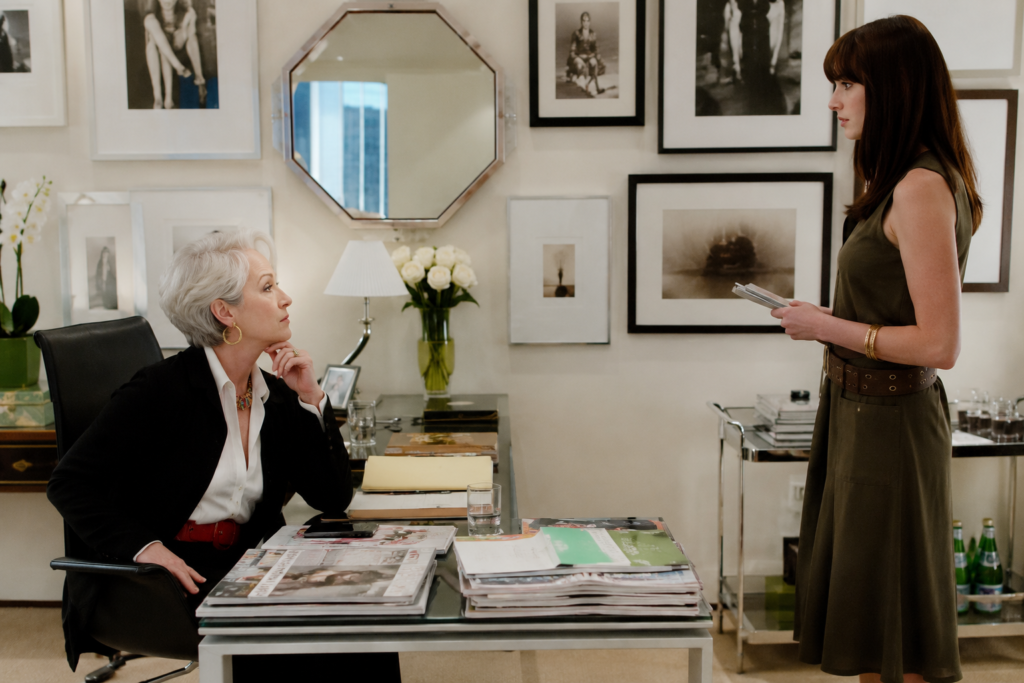
Andy Sachs and the Changing Meaning of Ambition
The first film reflected a particular era of career culture.
Professionals often defined success through prestigious employers, demanding bosses, and a willingness to sacrifice personal time for career advancement. They measured ambition by resilience, endurance, and commitment to the climb.
Andy eventually walked away from that path, choosing personal integrity over professional status.
Viewed from a contemporary perspective, her decision feels even more relevant.
Today’s conversations about work increasingly focus on burnout, boundaries, mental well-being, and sustainable careers. Young professionals are often less interested in climbing traditional ladders and more interested in creating flexibility, autonomy, and meaningful work.
The sequel revisits Andy in a world where professional success is no longer defined by a single institution. Her journey reflects a broader cultural shift in how people understand achievement and fulfilment.
Fashion’s New Power Players
Fashion remains influential, but the centres of power have shifted.
Luxury fashion houses continue to hold cultural prestige, while mass-market brands dominate accessibility and scale. The ongoing conversation around luxury fashion vs mass market reflects larger questions about value, exclusivity, and consumer identity.
At the same time, creators, influencers, and digital communities now play a significant role in shaping global fashion trends. Their influence extends across continents, often reaching audiences more directly than traditional publications.
This transformation can be seen everywhere—from the streets of Milan, the Italian Fashion Capital, during fashion week, to emerging creative markets around the world.
Power has not disappeared from fashion.
It has become decentralised.
Why Miranda Priestly Feels Different in 2026
Perhaps the most surprising aspect of revisiting Miranda Priestly is how audiences perceive her today.
In 2006, she was often viewed as a symbol of workplace toxicity and impossible standards.
In 2026, some viewers may see something else.
Miranda is demanding, but she is also clear. Her expectations are visible. Her authority is direct.
Modern professional environments can sometimes feel more ambiguous. Performance is constantly measured through data, visibility, engagement, and personal branding. The pressure to remain relevant often extends beyond office hours and into every corner of digital life.
This does not make Miranda a hero.
But it does make her an interesting contrast to the less visible systems of power that shape contemporary careers.
The Devil Wears Prada 2 Is About Relevance
At its core, The Devil Wears Prada 2 is not simply about fashion magazines.
It is about relevance.
Miranda is fighting to keep an institution influential in a changing world. Andy represents a generation that learned to define success differently. Emily reflects on how power has migrated into new corners of the fashion ecosystem.
The film’s central conflict mirrors challenges facing journalism, publishing, luxury fashion, and the wider creative industry. Established institutions are no longer competing against a handful of rivals. They are competing against technological disruption, changing consumer behaviour, and rapidly shifting cultural expectations.
The question is no longer who has power.
The question is whether power can adapt.
What Fashion, Journalism, and Media Can Learn From The Devil Wears Prada
The enduring appeal of The Devil Wears Prada lies in its understanding of change.
The first film documented an era when authority flowed from institutions. The sequel explores a world where authority is increasingly contested, distributed, and challenged.
The fashion industry cannot depend on heritage alone to remain influential. Journalism continues to draw strength from credibility, yet relevance demands constant adaptation. Meanwhile, media organisations face a different challenge altogether: capturing attention is easier than earning trust.
And for creative professionals, perhaps the most important lesson is that every industry eventually experiences disruption. The challenge is not avoiding change. The challenge is understanding how to evolve without losing the qualities that made the work meaningful in the first place.
Twenty years ago, Andy Sachs entered a world that seemed impossible to access.
Today, access is everywhere.
Relevance is the new luxury.
Interesting perspective on power dynamics in the fashion industry! It’s fascinating how the film reflects deeper societal themes beyond just the glamorous surface.
Beneath the surface of fashion, it’s intriguing how the narrative of power dynamics plays out in “The Devil Wears Prada.” It’s a compelling reminder that ambition often comes with a steep price.
The exploration of power dynamics in “The Devil Wears Prada” really highlights how ambition can shape personal relationships and professional landscapes. It’s interesting to see the film’s themes being relevant beyond just the fashion industry.